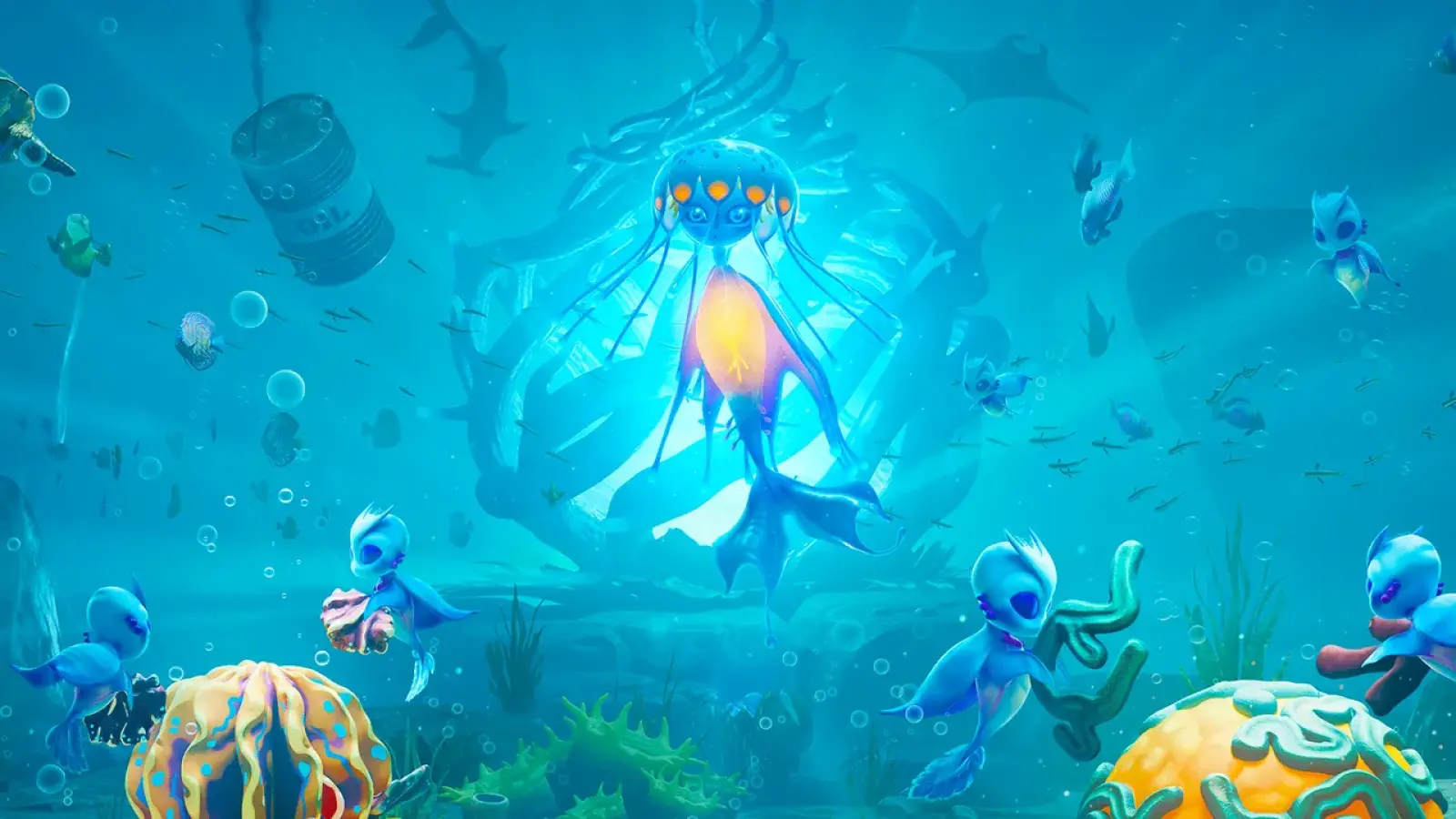
Life Below: a city builder under the sea that unexpectedly drew me in.
✅ Prednosti
- Unique concept of building a coral reef
- Pleasant atmosphere and calm soundtrack
- Clear explanation of mechanics through tutorial
- Ecological theme without excessive sentimentality
- Technically sound and bug-free
❌ Nedostaci
- Less hardcore than other city builders
- Lacks deep micromanagement elements
- Some balance issues in the ecosystem
- No challenging apocalyptic events
- Game may become monotonous
After years of building medieval villages, industrial chains, colonies on the brink of collapse, and cities that fall apart as soon as you forget one road, Life Below poses a very simple question: what if we built something that isn't just another village, city, or island? What if we built a coral reef?
I admit, my first reaction was roughly: seriously, corals? A city builder underwater? Alright, maybe? But then... then I played for a few hours. The camera dove beneath the surface, the sea spread out before my eyes, the soundtrack gently breathed in the background, and I found myself zooming in on corals, watching the tiny inhabitants of the reef, and carefully studying the small ecosystem I had built.
And suddenly you realize: the underwater world is actually a very good setting for a city builder. We were probably just too busy building yet another farm and iron mine to notice it earlier.
A game where you don't build a city, but an ecosystem
Life Below is a cozy city builder, but with a clear shift from what we usually expect from the genre. Instead of roads, houses, markets, and barracks, here you build a coral reef. Instead of ordinary inhabitants, you try to attract marine species. Instead of thinking about where to place a bakery, you wonder how to maintain a stable ecosystem, where to place corals, how to expand life, and how to ensure your reef doesn't look like a sad underwater shelf from a zoo.
At the center of it all is the Reef Heart, or the heart of the reef - the main building and the foundation of your underwater settlement. Around it, you slowly expand life. You build coral structures, unlock new possibilities, balance resources, and ensure that the reef is not only beautiful but functional.
The game introduces you to all of this very pleasantly. The tutorial is not one of those that bombards you with fifty windows and immediately kills your will to live, but gradually explains the basic mechanics: how energy works as the main currency for expansion, how to maintain resource production, how to connect coral structures to the Reef Heart, how to populate fish, and how to get new water spirits, or little workers who build, collect, and maintain your reef. Everything is clear enough to quickly catch the rhythm, but not banal.
These little, cute spirits are one of the favorite details. They are not just an abstract number of workforce in the corner of the screen. You see them moving, working, building, and collecting, and this gives the entire reef a sense of life. It's like watching a tiny underwater organism slowly start to function. And of course, you immediately become emotionally attached to the little beings that gather resources.
Chill, but not completely toothless
The best description of Life Below would be: relaxing, yet addictive. This is not a city builder that immediately throws you into panic, hunger, fire, epidemics, and financial collapse, because we have real life for that. Life Below takes a different path. The atmosphere is calm, the soundtrack is soft and unobtrusive, and the whole game has that pleasant pace where you always have something to do, but rarely feel the system pushing you down the stairs.
This doesn't mean the game is empty; it's just less hardcore. There are deeper builders, of course. If you're looking for a micromanagement hell where every decision has seven consequences and three Excel spreadsheets, you might not get that dose of suffering here, but Life Below still has enough layers to be satisfying.
You have to think about space, types, conditions, biomes, and how different parts of the reef develop. One zone might be home to clownfish, another might suit a different species better, some areas are cooler, some are warmer, and some require more careful consideration of balance. This is where the game becomes interesting. You’re not just building “another object,” but trying to assemble a small ecosystem that makes sense.
In its best moments, Life Below makes you think almost like a gardener. Not in the sense that you mathematically optimize every meter, but that you feel where something belongs. This is where this species goes. Here I will expand the corals. Here I will let the reef thicken. Here I want everything to look like a small living corner of the ocean. It’s not just building for efficiency, but building for feeling.
When the reef finally starts to fill with its first inhabitants, the game really shines. The first few fish, the first organisms that begin to circle around the corals, the first moment when you no longer see an empty underwater surface but a place that is alive - that is the small, quiet reward that makes city builders work, when you look at something you’ve assembled and think: okay, this works.
The game occasionally introduces ecological problems, or disasters that you need to solve. They don’t come as huge apocalyptic events that will destroy everything you’ve built in two minutes, but more as a reminder that the reef is not a static decoration. Sometimes pollution appears, conditions change, or a threat disrupts the balance, so you have to react, clean the area, restore damaged parts, and ensure that life stabilizes again. This adds a slight pressure to the otherwise calm gameplay, just enough to remind you that you are managing an ecosystem, not an underwater wellness center.
The underwater world provides excellent atmosphere
The greatest strength of Life Below is definitely its atmosphere. The underwater world is not just a backdrop, but a main character. Corals, fish, light, small movements, and the way life slowly returns to the space give the game a special charm.
This is one of those games where you’ll find yourself zooming in for no gameplay reason. Not because you have to click on something, but because you want to see the details. You want to see what a new species looks like, how it moves, how the little spirits swirl around the reef, how the zone you just built is now turning into something livelier.
I particularly liked that the game has several different viewing modes. The basic view is for normal building and management. The technical view helps you see zones, conditions, and functional information more clearly, and then there’s the cinematic view, where everything important practically freezes and you can just observe the world through the camera of a specific creature.
This cinematic mode is a great addition. Not because it’s necessary, but because it shows that the game understands its own rhythm. Sometimes the point is to stop and watch the reef you’ve built. To observe the underwater world from the perspective of a fish or another sea creature. To disconnect a little and not just be a manager, but to experience the world you’ve built.
Ecology without lecturing
Life Below has a clear ecological theme. The ocean is endangered, coral reefs are disappearing, and your task is to bring life back where it is slowly fading. This is the foundation of the entire game and it’s hard not to notice it. But the good news is that the game doesn’t feel like it’s hitting you over the head with a school presentation.
The story and characters are charming, and the tone is warm. There is a sense of care, renewal, and preservation of something fragile, but without too much pathos. The game doesn't try to corner you every three minutes and explain that you are a bad person for using plastic. Instead, it lets you feel through gameplay what it means to bring life back to a space.
This is a smarter approach. Because when you build a reef yourself, when you see it getting populated, when the space that initially felt empty becomes richer and livelier, the message resonates much more naturally. Not because someone told you, but because you played it.
The animal species here are not just decoration, although a large part of the pleasure definitely comes from seeing your reef fill up. Different species have their own conditions and expectations, so you can't just randomly toss them into the space like decorations for an aquarium. You have to prepare the environment, pay attention to what suits them, and gradually expand biodiversity, which gives the game a sense of progress.
Technically sound and enjoyable to play
Technically, Life Below runs excellently. I haven't encountered any bugs, stutters, or issues that would spoil the experience. The UI is clear enough, information is mostly accessible, and the transition between normal and technical views helps you not get lost when the reef starts to grow.
This is important because games of this type can easily become chaotic. If you can't see what's happening, if the systems aren't clearly displayed, or if the camera constantly bothers you, the whole chill vibe goes straight out the window. Life Below plays smoothly and feels polished enough not to break the atmosphere.
The biggest potential complaint is precisely what will be an advantage for some: Life Below isn't too hardcore. If you're coming for an extremely deep simulation, brutal production chains, and constant pressure, the game might feel too soft. This is more of a cozy builder with challenges than a merciless survival simulator.
Another thing is the pace. The game is relaxing, but that means it might occasionally feel slow to some. There's no constant drama, no major crises every two minutes, no feeling that your reef is falling apart if you look in the wrong direction. I liked that rhythm, but I understand it won't suit everyone.
Thirdly, although the setting is original and charming, the basic loop remains familiar: gather resources, build, unlock new things, expand the area, attract new inhabitants. Life Below reshapes it well enough through the underwater theme, but if the city builder formula itself doesn't appeal to you, the mere fact that everything happens underwater might not be enough.
Conclusion
Life Below is a beautiful and warm game with an original atmosphere. It is not the deepest representative of the genre, nor does it try to be an underwater RimWorld with fish and emotional trauma. Instead, it offers something calmer, softer, and different: a city builder where you don't build yet another colony on the brink of collapse, but a small ecosystem that you are slowly bringing back to life.
I was captivated by that underwater ambiance, the calm soundtrack, the detailed coral world, and the feeling that I am building something that is not only functional but also beautiful. It is especially rewarding when the reef comes to life, when the first inhabitants appear, and when the space that was empty just a few minutes ago suddenly starts to look like a place that has its own rhythm.
It's not a game for everyone. Some may want more depth, more pressure, or more complexity. But if the idea of building a coral reef sounds at least a little interesting to you, Life Below might pleasantly surprise you. It did for me. I came in thinking: seriously, corals? And then I started constantly zooming in on the fish and checking how my little underwater world was progressing.
A copy of the PC version of the game was provided for review purposes by the publisher Kasedo Games





































-hero.webp)




-hero.webp)